 Explore our Christmas Collection

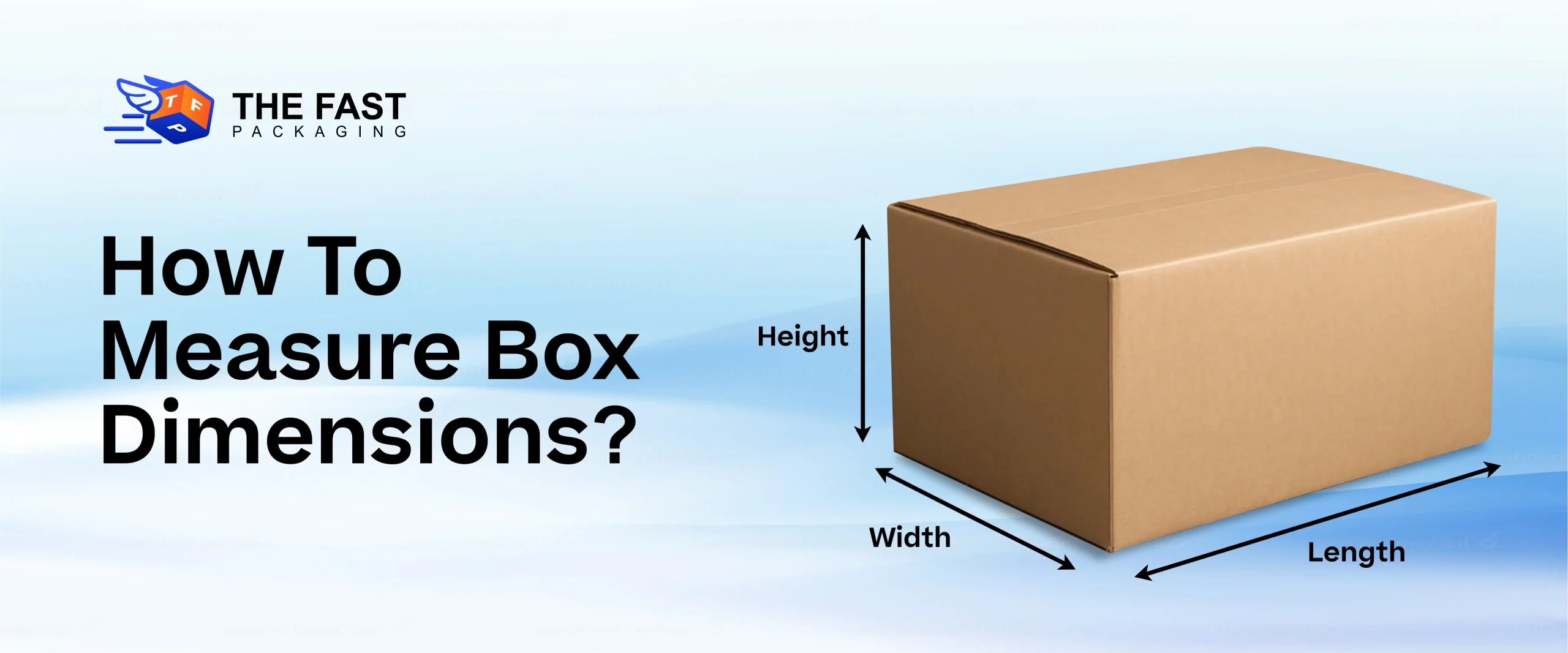
Accurate box dimensions are key to achieving safe shipping and maximum protection for the packed products. The right measurements enable the optimization of required material, resulting in lower shipping costs and optimal protection. Don’t know anything? This practical guide gives the most appropriate answer to the question, “How to measure box dimensions?”
There are several things to consider. Let’s dive in to know everything related to box sizes and dimensions.
You need to be aware of certain issues before taking the measurements of your box dimensions. Here are some of the common issues that may occur:
Avoid using the wrong tool for the box dimension measurements.
Avoid placing the box on an uneven or curved surface when you take your box dimensions measurements.
Record all of the box dimensions (Length x Width x Height) in the same order and with the same units (e.g., inches or cm).
Always measure boxes using the same unit (e.g., inches or cm).
To determine the size of your magnetic closure box for measurement, you will require an appropriate measuring tool. Many measuring tools can be used to obtain accurate box measurements:

When it comes to shipping products or just storing items, it is important to understand how to measure packaging dimensions. This approach helps you choose the proper size of the packaging.
Below is a step-by-step guide on how to measure the dimensions of your boxes.
Take a measurement of the largest side of your package. Identify the large side of your package, then position your measuring tool on that edge, and measure it.
Now measure the side that is not as long as the longest side, but still longer than the height of the package. It is time to measure along the short edge by positioning your measuring tool at the top of the package and measuring down to the opposite end.
Time to measure the height of your package? How to do that? You can measure the height of the packaging from the top of the package to the bottom. You have to measure vertically to find the height of the package.
To calculate the box volume, you multiply the three dimensions (length, width, and height).
Formula: Volume = Length × Width × Height
To find the Girth of a package, you must use the formula (Length × Width × Height) or L × W × H. The Girth measures the full circumference of the box.
Once you complete all the measurements, write them down in the correct order: Length × Width × Height (L × W × H).
Want to get a precise measurement of the box dimensions? Many people make mistakes that affect the box dimension measurements. Some of the most common measurement mistakes include:
People who place their box improperly take the wrong dimensions. In order to avoid mistakes, it should be placed on a flat surface to ensure the correct measurements, such as length, width, and height.
It causes some issues for the individuals who measure the outside dimensions of the box instead of the inside dimensions of the box. The outside box dimensions are used for shipping calculations, but the inside dimensions are necessary for fitting the item into the box.
Custom printed packaging has a certain amount of wall thickness that can reduce the interior space of the box. So, it is very important to have an accurate measurement of the box.
The use of inconsistent units can lead to measurement errors and calculation issues. It is best to use the same unit (i.e., inches, cm) for measuring the box dimensions. Do not mix and match units (e.g., inches for length, cm for width, etc.) for calculating the volume of the box.
Measuring the box using the same units will help you to calculate the correct volume of the box and eliminate any sizing mismatch between the box and the item being shipped, thus eliminating potential shipping and packaging errors.
Don’t consider the additional space required for padding or protective materials (such as foam, bubble wrap, or inserts)? If you do not consider the padding and protection requirements for the item, you will likely end up with a box size that does not provide enough room for the item to fit securely.
This may result in increased damage risk to the item during storage and shipping. Therefore, always factor in the padding and protection requirements to ensure a secure fit for the item.

There are a wide variety of benefits when it comes to precise box measurement. Take a look at some of the following benefits that are common for everyone:
The right measurements of the packaging provide a snug fit for packed products and also lower the chances of the product’s movement. A well-sized box prevents shocks, jarring effects, or movements while handling, display, storage, or transport.
Accurate measurement of the packaging also adds to the visual appeal of the enclosed items. It also helps your brand and product to differentiate from others. The right size of the packaging gives a snug fit, preventing product damage.
The right measurements of the packaging reduce the excess usage of packaging materials. This approach saves money and reduces the carbon footprint, promoting sustainability. Hence, the right size of the packaging optimizes material, minimizing the total costs.
The right size of the packaging reduces total costs. Confused? The right measurement of the packaging lowers the usage of material, production costs, and shipping charges. Well-sized packages optimize storage space in the warehouse, lower storage expense, and amplify logistics efficiency.
This table helps you give an overview of measuring the box dimensions in the glimpse.
| Dimension | What It Measures | Example (inches) | Used For |
| Length (L) | The longest side of the box | 16″ | Product fit, shipping labels |
| Width (W) | The shorter side of the base | 12″ | Product arrangement, box strength |
| Height (H) | Vertical distance from base to top | 10″ | Shipping cost, shelf fit |
| Outer Dimensions | External box size with flaps | 16″ × 12″ × 10″ | Shipping quotes, warehouse logistics |
| Inner Dimensions | Usable space inside the box | 15.5″ × 11.5″ × 9.5″ | Product packaging, internal cushioning |
| Total Size | Combined measurement (L + W + H) | 38″ | Carrier surcharge thresholds |
| Volumetric Weight | Dimensional shipping weight | ~13.8 lbs | FedEx, UPS, DHL, international shipping |
| Girth + Length | Parcel measurement for couriers | G+L = 64″ | USPS shipping guidelines |
The Fast Packaging has all the skills to manufacture the packaging of any type in any dimension through our customizable product packaging solutions. We use the best materials, layouts, printing, finishes, and add-ons to craft these boxes to achieve cohesive branding at wholesale rates.
So, what are you waiting for? Feel free to reach us and discuss your packaging needs.
To take an exact measurement of the dimensions of your box, read this guide from beginning to end. This blog will cover all the details that you need to know. First, prepare the box in a flat position. Take the measurements of length, width, and height.
Calculate volume and Girth. Make sure to keep a record of these measurements as well as add any padding. Understand what errors to avoid and how the correct dimensions are vital to the enclosed product.
You need to know how large the boxes will be, so you’ll have to measure the packaging’s length (l), width (w), and height (h). A good example would be if a box is 10″ (inches) long, 5″ (inches) wide, and 4″ (inches) tall. The formula for the total volume would be l w h = 10 5 4 = 200 cubic inches.
Yes, several apps allow you to measure your box. “Measure Kit,” an app for iPhones, offers a set of more complex tools to take measurements of 3-D items. An alternative to this app is “AR Measure,” which uses your phone’s camera with Augmented Reality to help you take measurements in real-time.
No, but you must have one. Calculating the wrong measurements could result in incorrect charges from the carrier, and you may also incur late fees due to the improper packaging. This is why we always suggest using a scale.
The dimensions of the packaging include length, width, height, and girth. Use a tape measure to measure the packaging’s length, width, or height to get the correct dimensions. Girth is the width plus the height of the packaging, multiplied by 2.
Yes! Most carriers encourage you to round all the dimensions up to the next highest whole number of inches to prevent overcharging and to reduce the possibility of delayed delivery.


